
- → The Sell-Side Just Unionised—Ad-Tech’s Middlemen Are Now the Story They Once Replaced
- → How a ‘Pub-Side Cartel’ Took Root in Plain Sight
- → Anatomy of the Enemy—Margin Reallocators & Rebate Schemes
- → Parallel Experiments—What If the Pipe Tightens?
- → Buy-Side After-Shocks—DSPs Rush to Build ‘Ozone Adaptors’
- → Privacy Sandbox Wildcard—Why Publishers Won’t Wait for Google
- → Closing Shot—Who’s Expendable Now?
The Sell-Side Just Unionised—Ad-Tech’s Middlemen Are Now the Story They Once Replaced
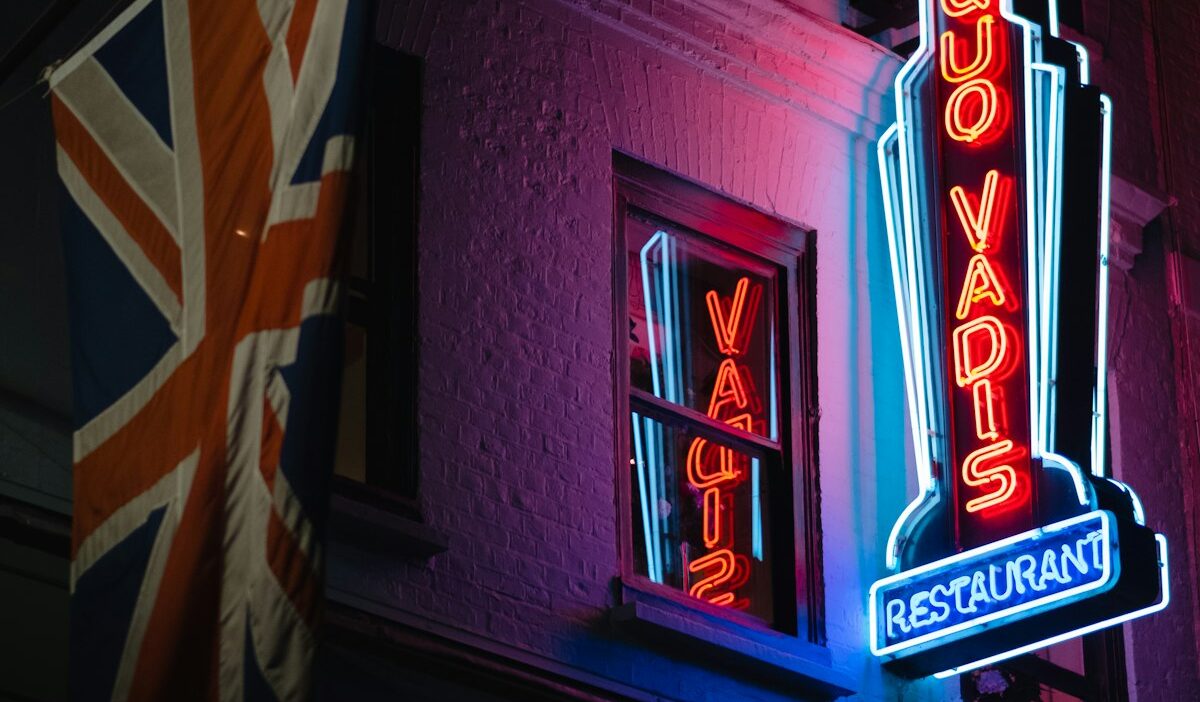
The newsroom lights dim at 8:47 p.m., half the desks already empty, another voluntary-redundancy email still warm in reporters’ inboxes. Outside, a London drizzle smears the neon of a nearby betting-shop sign—an accidental metaphor for an industry gambling its future on ever-thinner margins. Danny Spears, commercial chief at publisher alliance Ozone, summarises the mood with a grimace: “There’s something unique about this moment, the magnitude of those challenges and the extent to which they’re all coming at the same time.” Translation: traffic is down, cookies are vanishing, and the macro economy is squeezing ad budgets like a vise. But tonight the sell side isn’t surrendering; it’s quietly staging a board-room coup.
Four years after launch, the once-sleepy Ozone collective—founded by The Guardian, The Telegraph and a handful of other UK news heavyweights—has reached critical mass. By pooling premium inventory and first-party data, the group now controls enough scale to flip the open-auction food chain. In plain English: publishers are cutting out the “corrosive intermediaries” they blame for siphoning 45 pence of every programmatic pound. If the plan works, the only thing left to trim…is the intermediary.
How a ‘Pub-Side Cartel’ Took Root in Plain Sight
Ozone began life in 2018 as a defensive play against Google and Facebook. The premise was simple: if British news brands stitched together their inventory and logged-in users, they could offer advertisers the holy trinity of scale, context, and verified IDs—something even the walled gardens couldn’t replicate at a national level. Fast-forward to 2023 and two new converts have tipped the balance: Daily Mail and Our Media (publisher of OK!, Metro and TalkSPORT) quietly migrated their most valuable impressions into Ozone’s private marketplace. Result: the alliance now reaches more than 90 % of the UK’s top-10 news audience, according to comScore. One buyer at a holding-group desk jokes that booking a national news campaign without Ozone is “like buying TV and forgetting ITV.”
The numbers back up the swagger. Ozone’s unified login graph spans 35 million consented IDs, stitched from CRM, newsletter and subscriber data. Advertisers access it through curated PMPs priced at 2.4× open-market CPMs, yet still recording a 78 % fill-rate versus the 42 % the same inventory scraped together via Tier-2 SSPs. “We’re shifting 22 % of our UK news budget into Ozone PMPs this quarter,” the buyer admits. “Less fraud, more context, and zero mystery fees.”
Anatomy of the Enemy—Margin Reallocators & Rebate Schemes
Who exactly are these “corrosive intermediaries”? Spears doesn’t mince words: they’re middlemen “solely focused on margin reallocation”, experts at bid-caching arbitrage, rebate schemes and opaque tech taxes. An IAB UK study last year found that, on average, only 55 pence of every £1 spent programmatically ever reaches the publisher. The rest leaks into the pipes. One supply-side veteran, now on the buy side, puts it more bluntly: “They do a good job of taking money from publishers and moving it into the pockets of intermediaries through various schemes to reward their customers.”
Ozone’s counter-move is to collapse the stack. A single 7 % tech fee replaces the 20–30 % layered charges common on open exchanges. DSPs that once paid both DSP and SSP tolls now face one access gate, turning Ozone into a de-facto private SSP with pub-side leverage. Call it consolidation arbitrage: the bigger Ozone’s footprint grows, the more negotiating power it wields over platforms—and the less room there is for margin-grabbers.
Parallel Experiments—What If the Pipe Tightens?
Not every publisher is betting the farm on a single alliance. Inside Kensington’s Daily Mail headquarters, executives are pouring seven-figure sums into creator-style off-platform video, bankrolling TikTok and Reels talent whose audiences live far beyond the Mail’s own domains. The twist: 80 % of the resulting ad revenue stays in-house, thanks to direct-sold sponsorships and first-party data overlays. “We’re building a studio model, not just a newsroom,” one exec says. The hedge is obvious—if Ozone terms ever tighten, Mail’s diversified revenue offers a release valve.
A similar pragmatism drives Our Media’s recent pivot. After years of chasing Google SEO crumbs, the group slashed its search dependency and struck distribution deals with Apple News, Flipboard and smart-TV platforms. Six months later, Our Media is a top-five Apple News content provider, generating six million monthly unique users and CPMs three times higher than its remnant display ever achieved. “We’re agnostic about where the eyeballs sit,” CEO Simon Davies shrugs. “We just want more of the cheque to come back to us.”
Buy-Side After-Shocks—DSPs Rush to Build ‘Ozone Adaptors’
The ripple effects are already visible inside demand-side platforms. Three major buyers have built bespoke Ozone adaptors; two more will add them in Q3. Media-math explains the hurry: UK news inventory is scarce, brand-suitable and—crucially—cookie-proofed by Ozone’s ID spine. One planner at a global DSP says the alliance’s contextual-plus-cohort package (built from 30 million logged Guardian and Telegraph users) outperforms Chrome’s five-topic taxonomy by 4× on viewable CPM. Translation: advertisers chasing precision in a post-cookie world are re-routing budgets away from the open auction and toward publisher collectives.
Analysts now forecast that £180 million in UK programmatic spend—roughly 9 % of open-market news budgets—will flow through Ozone in 2024. That may sound modest, but remember: every pound moved into the alliance is a pound denied to traditional SSPs. The domino graphic writes itself.
Privacy Sandbox Wildcard—Why Publishers Won’t Wait for Google
Google’s Topics API arrives this year promising privacy-safe targeting, but publishers aren’t hanging around. Ozone’s contextual engine marries on-page semantics with first-party cohorts in a way Google’s five-topic taxonomy can’t replicate. Early head-to-head tests show four-fold CPM premiums for Ozone segments versus Topics-enabled inventory. “It’d be naive or even irresponsible for us to dance around that,” Spears argues, noting that sustainable journalism depends on publishers—not platforms—owning the targeting stack. In other words, the same regulatory pressure that kneecapped third-party cookies is now fuelling publisher alliances. The irony is delicious: the Privacy Sandbox designed to curb tracking may accelerate the rise of unified sell-side IDs.
Closing Shot—Who’s Expendable Now?
Back in that half-lit newsroom, the final print deadline passes. A junior reporter uploads a breaking-story alert to the Ozone-enabled CMS, instantly syndicated across The Guardian, The Telegraph, Daily Mail and Our Media properties. Within minutes, a travel brand’s bid lands direct, routed through a single 7 % tollgate. No SSP daisy chain, no mystery arbitrage, no 45 pence leakage. The intermediary middle layer—once indispensable—has become the last loose thread.
As the anchor voice-over might say: When publishers own both the content and the pipe, the only thing left to cut…is the intermediary.
💡 Deep Dive: Don’t miss our Ultimate Industry Guide for advanced strategies.


